Stable coins
What are stablecoins?
Fiat-backed cryptocurrencies, e.g. USDT and USDC.
The idea:
- The price of cryptocurrencies fluctuates a lot. This is undesirable for a medium of exchange and for a store of value.
- Design question: How can we combine familiar and stable fiat currencies with decentralised ledger technology?
- Solution: Tokens are issued by a private company on various distributed blockchains (e.g. Ethereum, Solana, etc.) in exchange for fiat currency paid to the the company. Very importantly, stablecoins are not their own protocols. They live on other famous protocols.
- Each token on the chain is 1-for-1 backed by money in a reserve account held by the private company in some bank. It can be redeemed and so the value is stable.
- The reserve account balance is periodically disclosed so that the public can monitor it and it is audited regularly by independent auditors. However trust in the private company issuing the token, the bank holding the reserves and the auditor is still necessary.
Who could use stablecoins?
Anything that you wanted to do with a cryptocurrency or a blockchain protocol, you can imagine doing it but now the money you pay is USDT or USDC rather than other wildly fluctuating cryptocurrencies. In this way, stablecoins help complete distributed ledger technologies by solving a key challenge they faced. This greatly enables crypto adoption.
One real world use case of stablecoins is in moving money across borders. If you can exchange your stablecoin for USD reliably in country A and country B, or if you can use your stablecoin to buy things in both country A and B, then you can imagine using blockchain to send money internationally. This could be important in scenarios where this method is cheaper than all alternatives, or if there are unjust government controls that prevent you from moving money out of the country, which you would like to avoid.
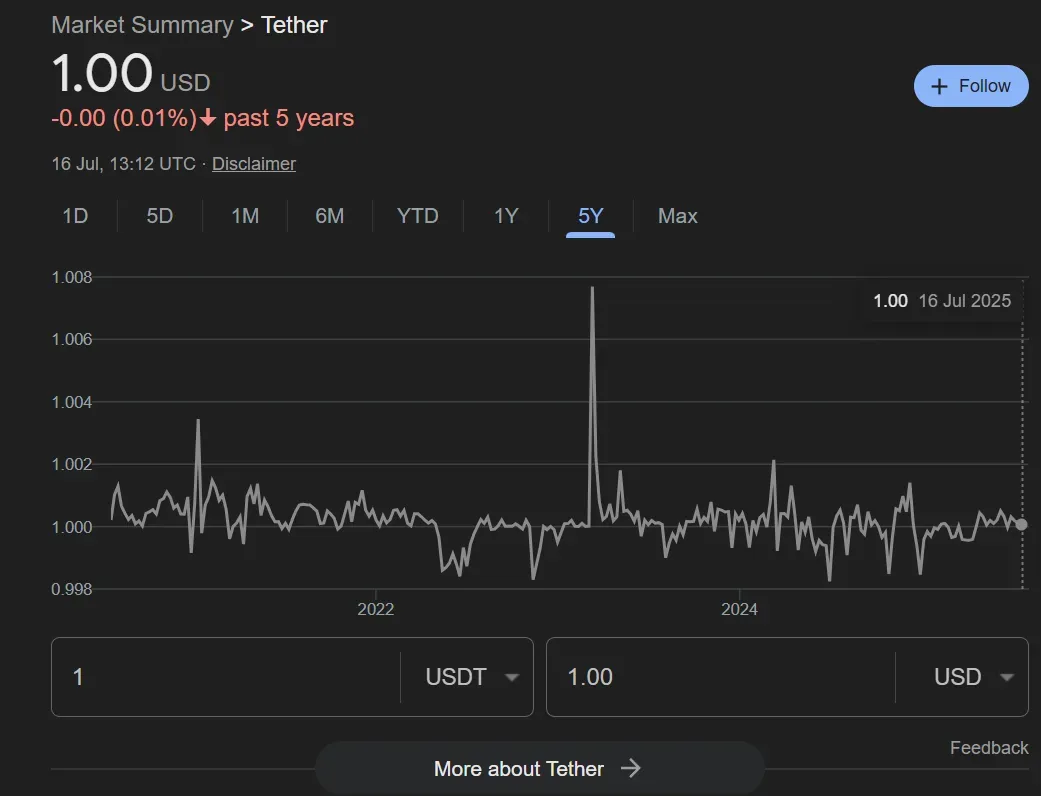
This doesn’t look so stable until you look at the scale on the vertical axis!
Case study: Stablecoins as store of wealth in Nigeria
Another reason to use stablecoins is as a stable store of value. In some countries the currency devalues a lot, and at times governments can prevent individuals from exchanging the local currency for foreign currencies due to foreign reserve shortages. This can lead to people storing their money in stablecoins.
Further questions
I would like to see more research into real world adoption of stablecoins (and crypto projects in general!). This research should answer the following questions:
- How many people are using it, how are they using it?
- How were they solving the same problem before?
- Is the crypto solution really better? (be sceptical but optimistic here)
- What are the risks that users are exposed to?
Another major question that is brought up: Should money be regulated?
Crypto and stablecoins work around government policies. But when are the policies actually sensible and does crypto respect that? Can it only serve to defeat the unjust policies, without also creating general lawlessness? These seem like questions that an crypto technologist should have clear and careful thinking about.
Addendum:
A valuable objection is why one needs stablecoins instead of a service like Wise or Remitly, for the purpose of moving money across borders, if we are relying on a private company in either case.
It might be that crypto is accessible across more geographies. Depending on implementation, it might also have a chance of charging less fees.