PPCDL Handling Assessment (aka PPCDL Practical Test)

I’m taking the PPCDL Practical Test tomorrow. Here are my notes to prepare.

Approach: The test is very institutionalised. You only need to focus on whats in the mark sheet. You can’t be marked down for reasons other than that.

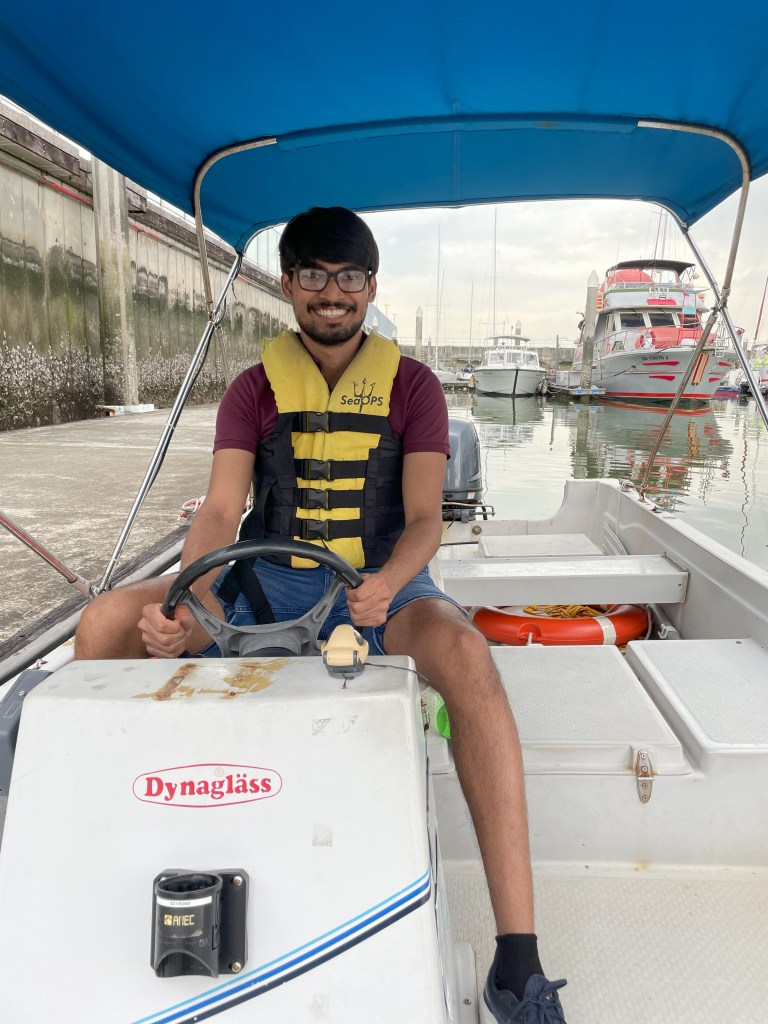
Note that the test boat is the Dynaglass 20DX, should be the same as the boat you had your training in.

Pre-sea Check

Preparations to get Underway:

  • Boat Berthing lines: Check condition of lines and check that they are secured
  • Boat Hull: Check the condition of the hull (bow, midship, stern on both port and starboard) for any cracks or signs of damage by craning your neck over the edge of the boat to look at the part of the hull visible over the water
  • Boat Compartments: There are 5 on the 20DX. Check for flooding (any water at all must be bailed out) and rubbish.
  • License Check: Check for four things: Registration number matches that on boat, number of passengers is adhered to, Expiry date of license and read the conditions of license
  • Equipment Check: See below.
  • Passenger Check: Remind passengers to help you keep a look out for any risk of collision and to promptly inform you if there is any risk of collision. Check that everyone is wearing a life jacket.
  • Passenger Rope Assistant: Appoint an assistant to untie the ropes, starting with stern then bow and finally midship

11 Equipment check

Fire(2):

  • Fire extinguisher – check expiry date and that the gauge is pointing in the green sector.
  • Fire bucket – check the condition of attached rope

Making presence known(4):

  • Flares – check that you have 3 for open deck boat (20DX) , and that they are not expired
  • AIS – ensure mounted and green light flashing every 6 seconds
  • Horn – check it works
  • Navigation lights – turn on and check top light and side lights

Drowning related(3):

  • Life jacket – everyone on board is wearing one, and spares up to capacity of the boat should be onboard
  • Life buoy – At least one for every four people on board
  • Bailer

Boat(2):

  • Anchor – check that anchor, chain and rope are connected and in good condition
  • Oars

Preparations to start engine:

  • Propellor check: Using either the button on the side of the outboard motor, or the button on the side of the throttle, raise the propellor of the outboard motor out of the water to check the propellor for damage or entanglement. Then lower the propellor. Can also check at this time if the OBM is securely fastened to the boat.
  • Controls check: Check that the throttle moves freely and all the way in both directions, then return it to neutral. Check that the helm rotates motor all the way in both directions (free movement and following helm). This is also a good time to remind yourself how many turns the helm allows from the central position.
  • Battery check: Check that wires are firmly connected to the battery
  • Fuel check: Check that there is sufficient fuel in the tank. If necessary, prime the engine by pressing the fuel pump 4-5 times until resistance is felt.
  • Kill switch: Explain that the kill switch is meant to connect to the driver but since the examiner is a qualified driver on board, we won’t do that. Just connect the kill switch.
  • Start engine: Ask examiner for permission and start the engine
  • Cooling check: Check that the cooling system of the engine is working. You should see a stream of water leaving the engine.

Unberthing

  • Lookout: Check your surroundings to ensure it is safe to move out. Assess direction of wind and current if any.
  • Manouevring: Turn helm hard away from the jetty and engage minimal astern propulsion. Straighten the helm slightly if that helps avoid collision between bow and jetty. Reverse out of tight spaces if there isn’t enough room to make a turn safely. Maintain a lookout as you reverse and keep to starboard side of narrow channel.

Man Overboard

  • Immediate action: Slow down, confirm by looking which side the man is overboard. Turn helm hard to that side. E.g. on hearing “Man overboard Port side!” -> Slow down immediately -> Check man is really on port side -> Hard to port
  • Follow up action – buoy: Ask the crew to throw a buoy to the man: “Crew throw a buoy!”
  • Follow up action – lookout: Ask the crew to maintain a constant lookout for the man (and by right, report the bearing of the man at short intervals). Do the same as the driver.
  • Follow up action – leeward side: Manouevre boat to rescue man on the leeward side. Announce to crew: “Crew prepare to rescue man on Port/Starboard side”.
  • Retrieve man: Bring the boat to a complete stop with the man abeam of the boat and within arms reach.
  • Check condition of man

Berthing

  • Tying knots: Make sure you are familiar with both knots (tying the boat to cleats or to a bar)

Oral assessment of Theory

Refer to my other blogpost where I discuss more about PPCDL theory.

Anchoring Theory:

  • First select an area to anchor. It should be sheltered (from wind, current and traffic), approved for anchoring, have plenty of space for swinging and have good holding ground (mud or sand).
  • Use a chart to determine depth and bottom conditions. Calculate the amount of scope as 4-7x the depth of the water.
  • Check the anchor, prepare it by laying out so it wont entangle, and cleat off at the point you want it to stop. Always anchor by the bow.
  • Face the wind and move astern slowly. Lower the anchor slowly until it lies on the seabed. Then keep lowering slowly as the boat is reversing. Once the anchor is set the line will stop shaking.
  • While anchored, monitor the bearing to two or more reference points to ensure that you are not drifting.
  • To release the anchor move forward while pulling the anchor up.

Helpful resources:

PPCDL Theory Test / COLREG – some key information

I took my PPCDL Theory Test last week and passed with a perfect score! Below are some notes I made for my own revision that might help you.


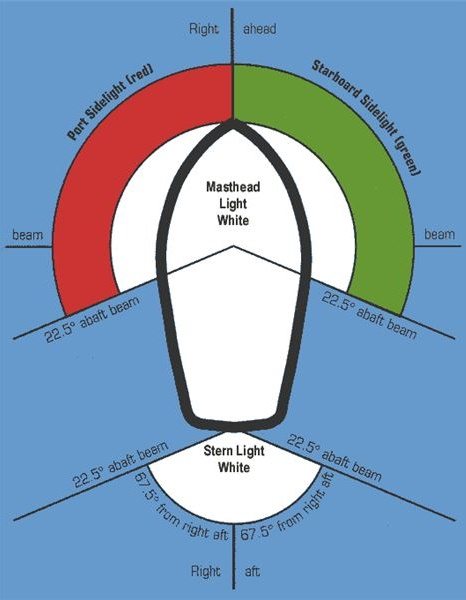
In COLREG, an overtaking vessel is defined as one within 135 degrees of the stern of a vessel infront.

The lights regulations can easily be remembered as…

Stern Light: Seen by overtaking vessel (135 degrees, towards stern of boat)

Masthead Light: Seen by non-overtaking vessel (360-135 = 225 degrees, toward bow of boat)

Port and Starboard Lights: Seen by non-overtaking vessels (225/2 = 112.5 degrees, from bow and going to each side)

Diagram showing top view of a boat and regions where different lights must be visible. (Source: Marine Insight)

The number and type of lights based on each type of vessel is also quite systematic if presented in a nice table:

Type of BoatNumber of lightsDescription of Lights
<7 metres and <7 knots max speed1All round white light
<12 metres2All round white light, and combined side lights
<20 metres3Masthead light, stern light and combined side lights
<50 metres4Masthead light, stern light and separated side lights
>50 metres5Masthead light, second masthead light abaft and higher of the first, stern light and separated side lights

Generally, only boats that are powered and making way have masthead white lights. I call the combination of stern, port and starboard lights as the “3 underway lights”. If this rule is broken, generally it is because an allround white light is shown and the vessel is not underway. In these cases sidelights are not shown.

Powered vessel = masthead light

Vehicle underway = stern and side lights

Anchored vessel = one or two all round white lights

The following special cases build on the previous table.

Type of BoatLightsRemarks/Interpretation/Mnemonic
Air cushioned vessel4 normal lights, and an all round flashing yellow lightACVs are difficult to control and hence dangerous. All round warning light is helpful.
Towing vessel (length of tow <200m)4 normal lights, extra masthead light (making a total of 2), extra YELLOW stern lightTowing vessel is like two vessels moving forward so it has two masthead lights. Yellow light at the stern side so overtaking vessels are cautioned to the fact there is a long length of tow.
Towing vessel (length of tow >200m)same as above + a further extra masthead light (making a total of three)Tow is so long its like three vessels moving forward, so three masthead lights
Sailing Vessel3 underway lights
(Optional: Red over green allround lights)
Sailing vessels don’t have power so they don’t have a forward light.

Red over green = sailing
Sailing vessel (<20m)Combined lantern of 3 underway lightsSame lights visible, but make the requirement easier for small boats.
Vessels not under command3 underway lights + two all round red lightsRed over red = not under command/aground.
(But still underway, so it has sidelights, unlike an aground vessel)
Vessels Restricted in ability to manoeuvreNormal lights + red-white-red allround lights in a vertical linered-white-red = restricted in ability to manouevre
Vessels engaged in dredging or underwater operationRestricted in ability to manouevre lights + two green lights on the side where it is safe to pass and two red lights on the other side
Green over green = safe to pass
red over red = not safe to pass
Vessel constrained by draughtNormal lights/Anchored lights + 3 red lights 3 red = constrained by draughtq
Pilot vesselNormal lights + white over red all round lightswhite over red = pilot vessel
Anchored vessel (<50m)White all round light in fore part of vessel.Just indicate your presence. As you are not moving, directionality is less important.
Anchored vessel (>50m)White all round lights in fore part and aft part (fore light is higher than aft light)Same as above + as you are a large boat, please have two lights.

(The aft light is lower to be different from >50m powerboats making way)
Vessel agroundAnchored vessel lights + two all round red lightsred over red = aground/not under command
Aground includes anchored lights. These are the “not under way” lights.

Easily confused: 3 black balls = aground vessel. 3 red lights = vessel constrained by draught.

We also need to know about key islands and maritime features of Singapore

It is said Singapore has 63 islands, but I believe this is a dated count. A number of islands have been merged either to each other, or to Singapore Island by means of land reclamation. Some islands have also been created this way.

BeaconRemarks
Serebut BeaconSouth of Jurong Island
Cyrene BeaconEast of Jurong Island , South of PSA Pasir Panjang
Sebarok Beacon
Selegie BeaconSouth of Sentosa
Sakijang Beacon
Changi Beacon
Prohibited Maritime FeaturesRemarks
Changi Naval Base
Tuas Naval Base
Tuas Dangerous Goods Jetty / Tuas Explosives Jetty400m within head – no stopping/anchoring
200m within head – no entry
60m within ramp – no entry
CAFHI JettyChangi Airport Fuel Hydrant Installation.
Located east of Changi beach park, west of Tanah Merah
Oil tankers deliver fuel to the airports here.
Chek JawaNature reserve in the South East corner of Pulau Ubin. Accessible by land, but not by water.
Bedok JettyKeep 30m away
Sembawang WharvesA port near the northmost tip of Singapore.
Marina Bay and BeyondSingapore River, Kallang River, Kallang Basin, Rochor River, Geylang river
Selat SengkirBetween Pulau Brani and Sentosa, towards the east. Police Coast Guard base.
Pulau BukomOil refinery

Bukom and Busing are connected by bridges. The pair of islands is near both Jurong Island and PSA Pasir Panjang. The islands are also notably north of Pulau Hantu.
Pulau BusingOil storage
Pulau SebarokOil and chemical storage

South east from Bukom and Busing. Near to Semakau.
Singapore Cruise Centre restrictionsHeight restriction of 50m on entry due to cable cars.
Between Labrador park and northwest corner of Sentosa.

No entry beyond turning circle, south east of Keppel island.
Jurong Island
Southern Islands Live Firing Areas
Pulau Satumu (Raffles Lighthouse)
West Johor Straits Live Firing Area

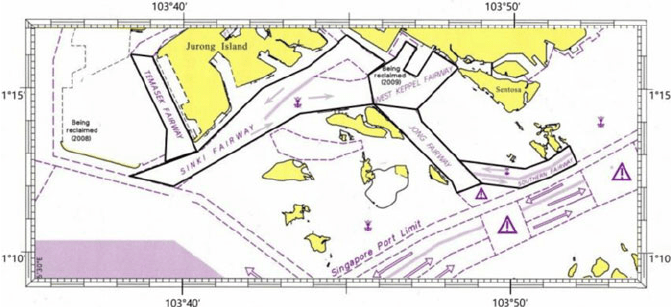
Some important fairways, left to right: Temasek Fairway, Sinki fairway, West Keppel Fairway, Jong Fairway, Southern Fairway

Other fairways to know:

West Jurong Channel – Between Pulau Jong and North west of Jurong Island

East Jurong Channel – Between Pulau Jong and North east of Jurong Island

Sisters Fairway – Between Sisters islands and St John’s Island

East Keppel Fairway – Just east of Sentosa and the southern islands

Eastern Fairway – East of east keppel fairway

11 mandatory items:

4 for making presence known – navigation lights, horn, AIS, flares (3 for open deck boat, else 6)

3 related to sinking – life buoy (1 for every 4 pax), life jackets (1 per pax), bailer

2 related to fire – fire extinguisher, fire bucket

2 related to boating – anchor, oars

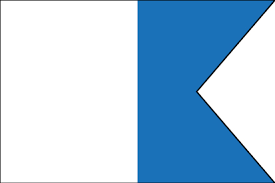
4 Flags to know

Alpha: Vessel engaged in underwater operations

Bravo: Vessel carrying dangerous goods or engaged in dangerous operations

Hotel: Pilot on board during pilotage duty

Quebec: “Healthy” vessel requesting free pratique, or vessel in quarantine.

What is a vector database?

In my PhD work, I am thinking about ways of encoding data that are inherently quantum mechanical. It pays to keep up to date with new ways of storing data. I was told about vector databases – roughly that they are used in machine learning applications – but I don’t know much more than this. In this post I will answer the following questions. These are rough notes typed up while reading in 1-2 hours.

Questions:

  • What sort of data is stored in vector databases and how is it stored?
  • What are the advantages of using vector databases?
  • Who is using vector databases?

I am reading the resources provided by Pinecone, a company that builds a vector database management software: https://www.pinecone.io/learn/

Vector Embeddings

  • Representing objects in your dataset as vectors allows you to process them nicely using Linear Algebra and Machine Learning tricks. The mapping of your datapoints to a vector space is called a vector embedding.
  • The vector embedding should be chosen in a way such that relationships between vectors mean something. For example, we might want objects that are similar to be represented by vectors that are closer together (have a larger inner product). Techniques to create vector embeddings are called vector embedding models.
  • Example vector embedding models: word2vec, using the outputs on the last hidden layer of a neural network.

Vector Search

  • Keyword Search is not as good as Semantic Search. Keyword Search looks for matches between the user search query and all the text in the corpus being searched over. This might miss search results that are relevant to the query but do not use the words in the search query. Semantic Search looks for items in the corpus that are semantically close to the search query, thus finding more of the relevant results. Semantic Search can be done using vector embeddings to represent the items of the database and the query in such a way that Vecto Search can be used to retrieve relevant items in the database.
  • Vector Search is performed in general as an Approximate Nearest Neighbour search. The search achieves a reduced running time by being approximate rather than exact.

Vector Indices

  • Vector Indices are a precursor to Vector Databases, that support some features such as fast vector search, but miss other features of data base management systems like supporting scalability, security, easy data management, easy software updating etc.
  • Facebook AI Semantic Search (FAISS) is one example of a Vector Index. It uses tricks like partitioning the vector space into cells and determining which cell to search for a match within when a query comes in, or splitting a vector into subvectors and clustering those.

Vector Databases

  • “a vector database provides a superior solution for handling vector embeddings by addressing the limitations of standalone vector indices, such as scalability challenges, cumbersome integration processes, and the absence of real-time updates and built-in security measures, ensuring a more effective and streamlined data management experience.”
  • More tricks to improve efficiency of similarity queries are used (like the one discussed above under vector indices). See here for descriptions: https://www.pinecone.io/learn/vector-database/#how-does-a-vector-database-work

Who uses Vector Databases?

  • Tech companies like Google, Meta, Spotify, etc.

I went for the powerboat license course in Singapore

SINGAPORE.

One day I looked at the map around Singapore and got really excited about the prospect of taking a boat to nearby places. I started exploring this interest by reading online about boating and sailing, watching vlogs and going to London’s Maritime Museum. As I was to be in Singapore soon, I booked a free taster session with Sailing At the Bay, and thought that I’d get back to London before looking into powerboating lessons or a sailing club there.

However, early last week I was telling so many people about this recent interest and feeling strongly about it, so I just looked up whether I can do a course in Singapore. I was able to find a slot for that weekend.


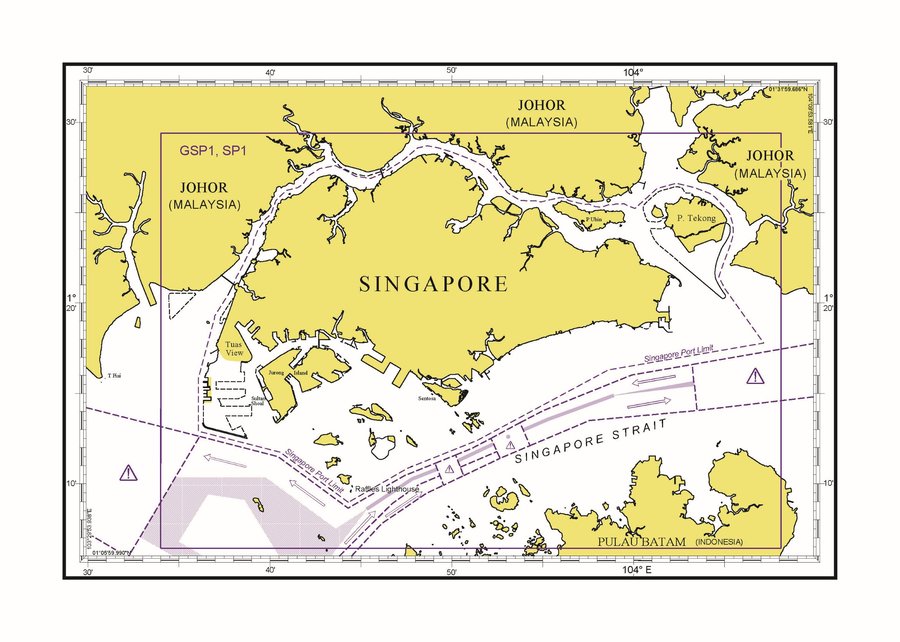
I went for a 2-day course that is required to obtain a Powered Pleasure Craft Driving License (PPCDL) in Singapore. This is a license that allows one to drive a powered boat of length less than 24 meters within Singapore Port Limits. This includes anything from jetskis, to fishing boats through to small yachts.

High level nautical chart showing Singapore Port Limits (Source: Maritime and Port Authority, Singapore)

The course was conducted at Raffles Marina, a marina club in Tuas located near the western-most station of the EW line and the Tuas checkpoint to Malaysia. This course is also conducted at other venues.

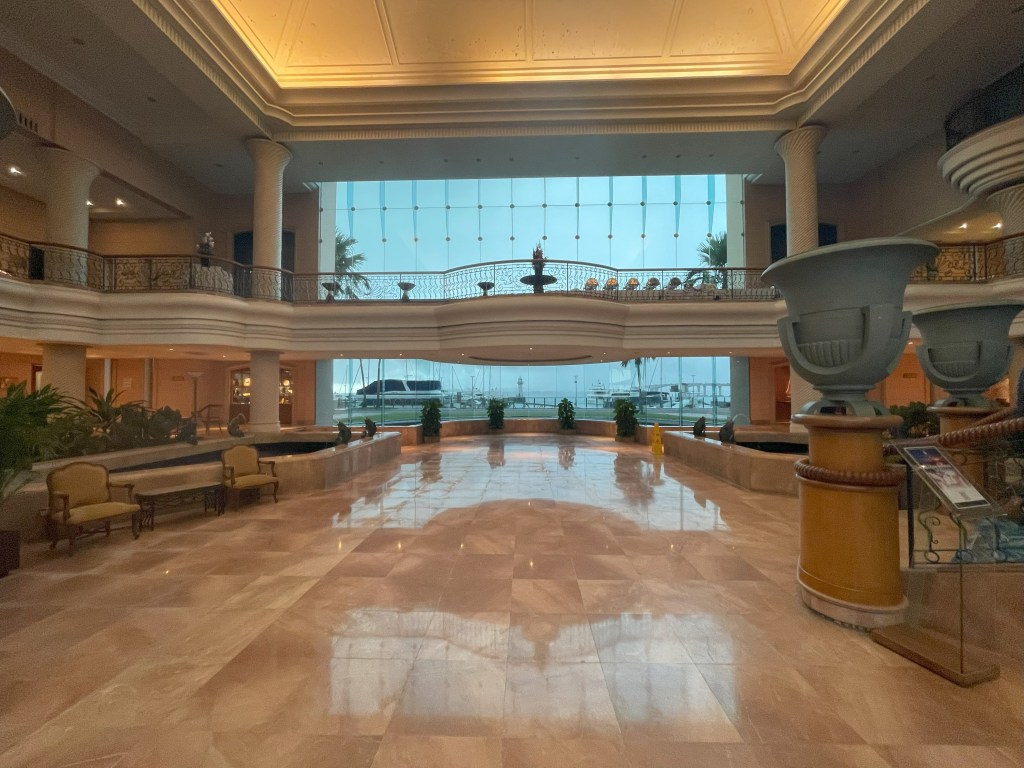
Atrium of Raffles Marina

Boardroom where we had the theory lessons (Source: RM)
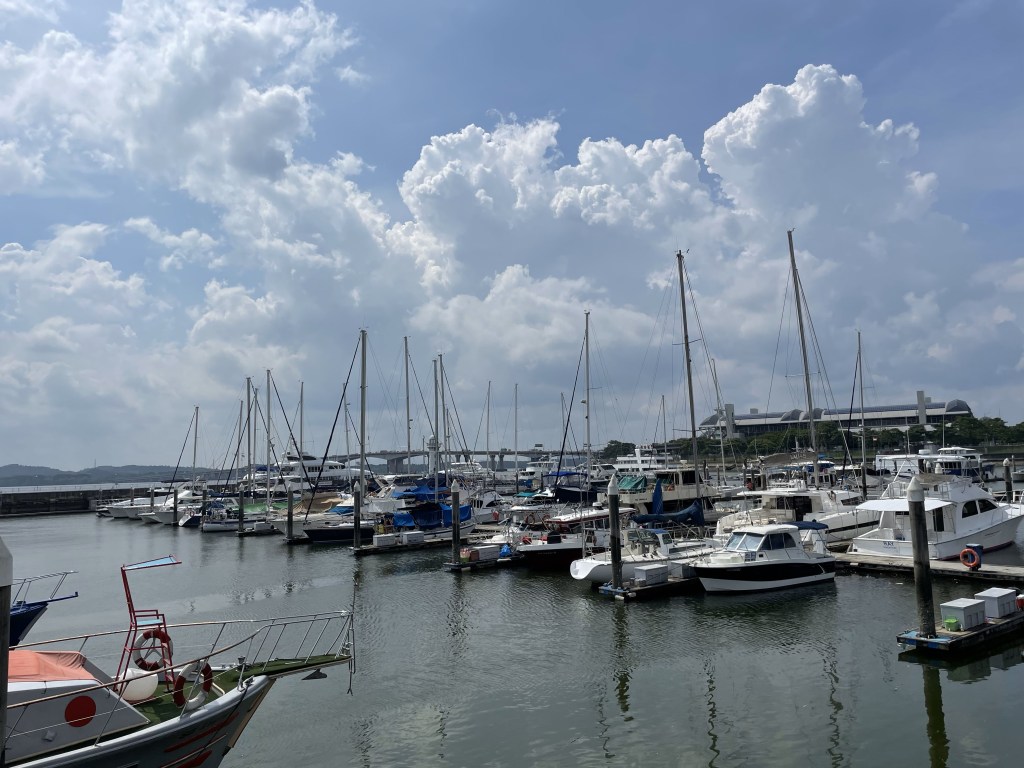
Boats berthed in Raffles Marina

The course was from 8:30am-5:30pm on Saturday and Sunday. The first half of each day was spent learning theory, and the second half on practical. Our course instructors were ex-Navy men with a lot of experience in the maritime sector. There were five students including myself.

The course covered the following topics.

Theory:

  • What a PPCDL is required for, and how to get one
  • Basic boating terminology
  • Mandatory boating equipment for pleasure craft in Singapore and how to use them
  • “Rules of the road” (Traffic rules at sea, what lights/shapes/sounds to use on your boat depending on scenario and type of boat)
  • Very basic coastal navigation (charts, bearings, tides, buoys and beacons)
  • Overview of Singapore’s islands and waters, including details such as which are nice to visit/designated for which water activities/restricted/prohibited.
  • Regulations in Singapore for all boats, and specifically for pleasure craft
  • How to respond to emergencies

Practical:

  • Pre-sea check
  • Boat handling
  • Berthing and Unberthing
  • Man overboard rescue
  • Tying knots to secure boat when berthed

In order to get my license I will still need to:

  1. Get an eyesight test
  2. Take a theory test
  3. Take a practical test
  4. Fill some forms to apply for a license

I’m not confident that I’ll be able to do all this within my current trip to Singapore, mainly because of availability of test slots, but there should be no problems getting it by my next trip back.


Some thoughts –

I thoroughly enjoyed the course. The theory part exposed me to so much of the Maritime world. I also gained some familiarity with charts and a better understanding of what’s in Singapore’s waters. Singapore becomes bigger if you also start enjoying its waters.

Buying a boat is an expensive affair but renting boats for a day at a time is a very realistic idea. You can go fishing, wakeboarding, diving, picnicking. There are enough islands and other areas you can explore by boat to keep you occupied for a while.

More than that, our waters and maritime industry made us what we are. Most people migrated here by boat in the early days, and the maritime industry is what made Singapore rich. To be seafaring and knowledgeable about maritime affairs could be something that we choose to make an essential part of the Singaporean identity.

It’s a more complicated process to get the licensure to be able to take a boat out of Singapore, but its possible, and I dream about some day sorting all that out to explore the Riau islands to the South of Singapore, Johor to the north, and perhaps further asea as well.

Driving a boat is a thrilling experience. Sea water splashing into the boat, wake from larger vessels disrupting the calm waters you were enjoying, being in waters you’d never thought were so easily accessible and there for you to enjoy. Cars have to keep to roads and in between lines, but boats can make way as they like.

I’m keen to hear any stories or ideas you might have about boating.

Would you like to come explore Singapore’s waters?

About this website

Hello. My name is Shashvat.

I am from Singapore and India.

I am doing a PhD in Quantum Computer Science at University College London.

I previously studied Computer Science and Philosophy at the University of Oxford.

I attended NUS High School of Maths and Science, and Global Indian International School.

I enjoy mathematics. I find computers to be the closest thing we have to magic.

I like to understand things through their essence and their history.

I like to find underrated, underexplored, underappreciated ideas and make them known. There’s plenty of low hanging fruit in this.

I also like to find canonical, celebrated and cliched ideas and reinterpret them for myself. It’s easy to have an illusion of understanding for such things.

I wish I was better at many things. I am always looking for ways to get better at those things. I expect my life to continue to change dramatically for the foreseeable future as I make progress on these things.

I can’t stand cynicism or hopelessness. An optimistic enjoyment of life is all we have.

This website documents what I’m doing and thinking about.