LONDON.
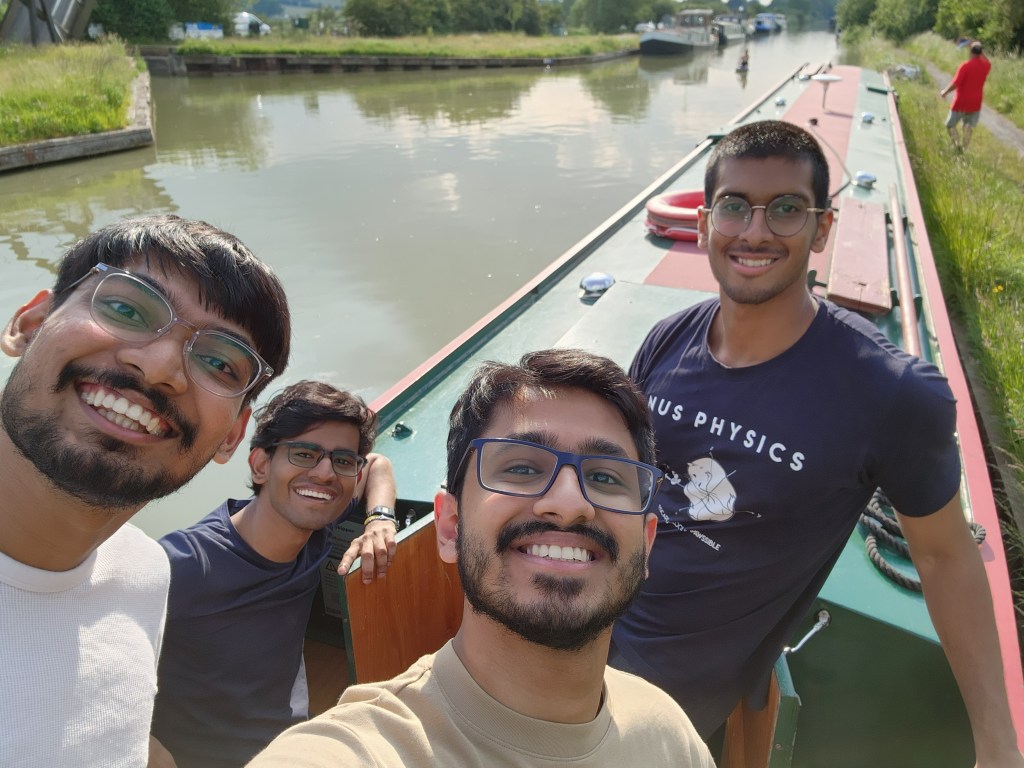
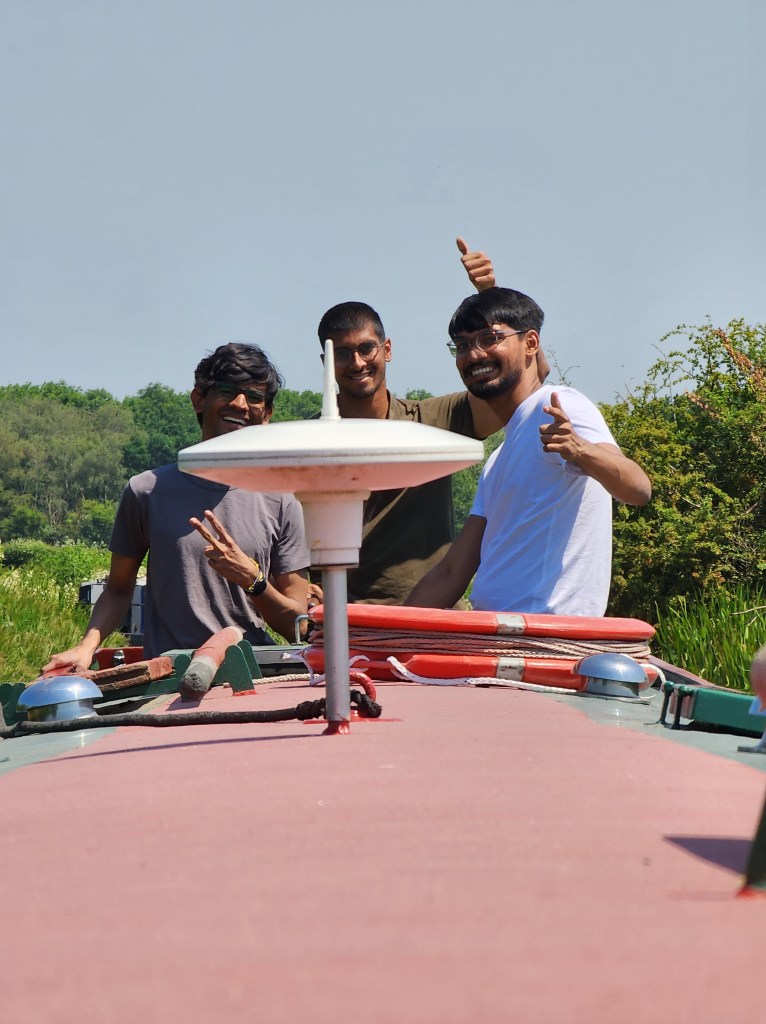
I went on a canalboat holiday with Mayank, Raj and Ashwin. I found that canalboating was pretty easy, beginner friendly and I realised it’s a really good holiday option in the UK (- it’s pretty cheap as well!)
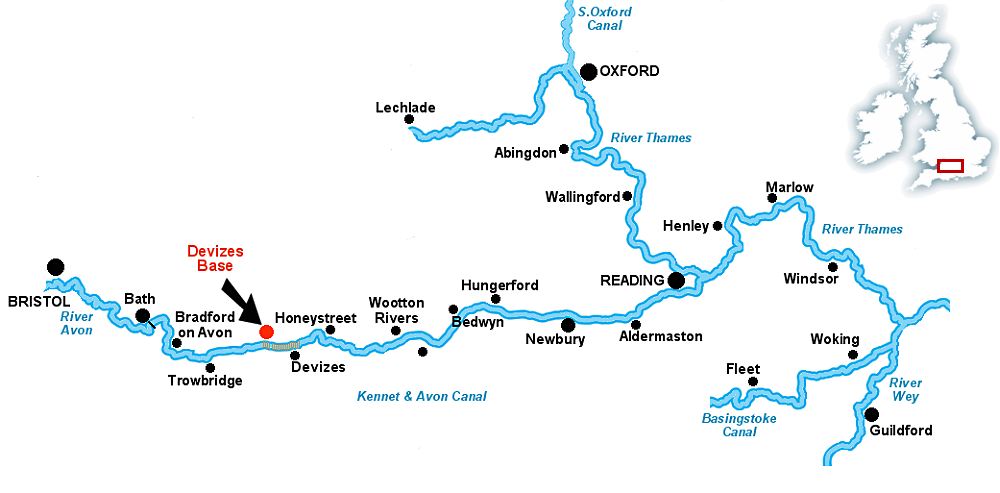
We rented the boat from a town called Devizes, then drove it to Bath and back. It took us 4 days to do this, driving for roughly 5-6 hours a day. The boat moves really slowly – the speed limit on canals is 5 mph (or 8 km/h).
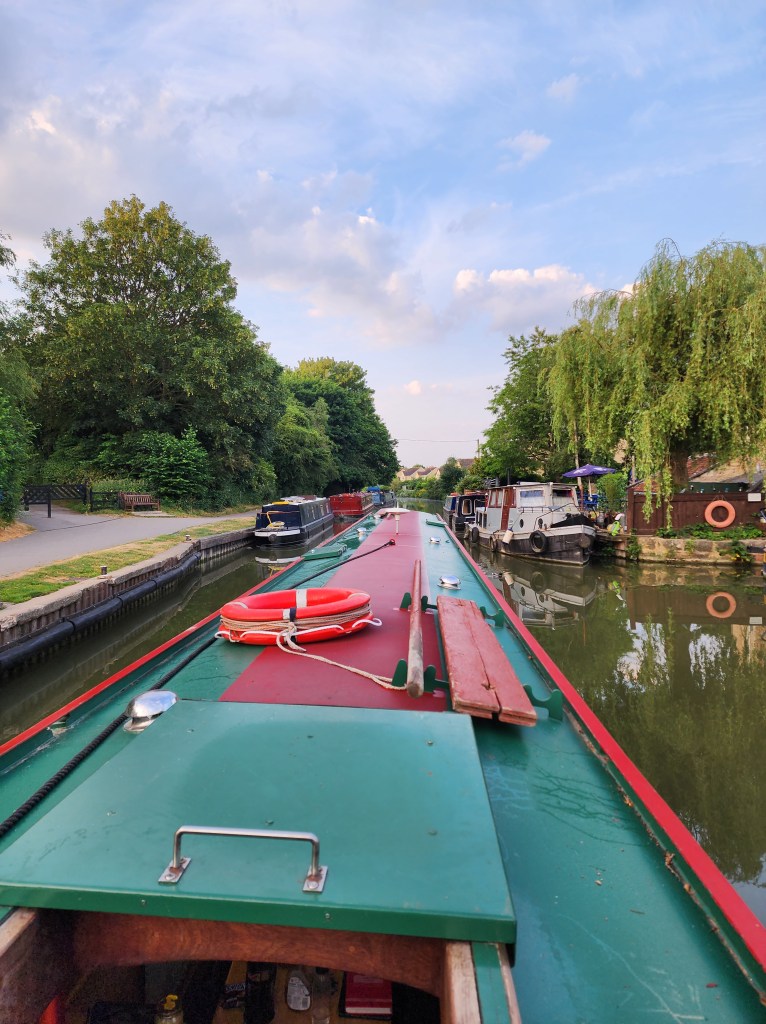
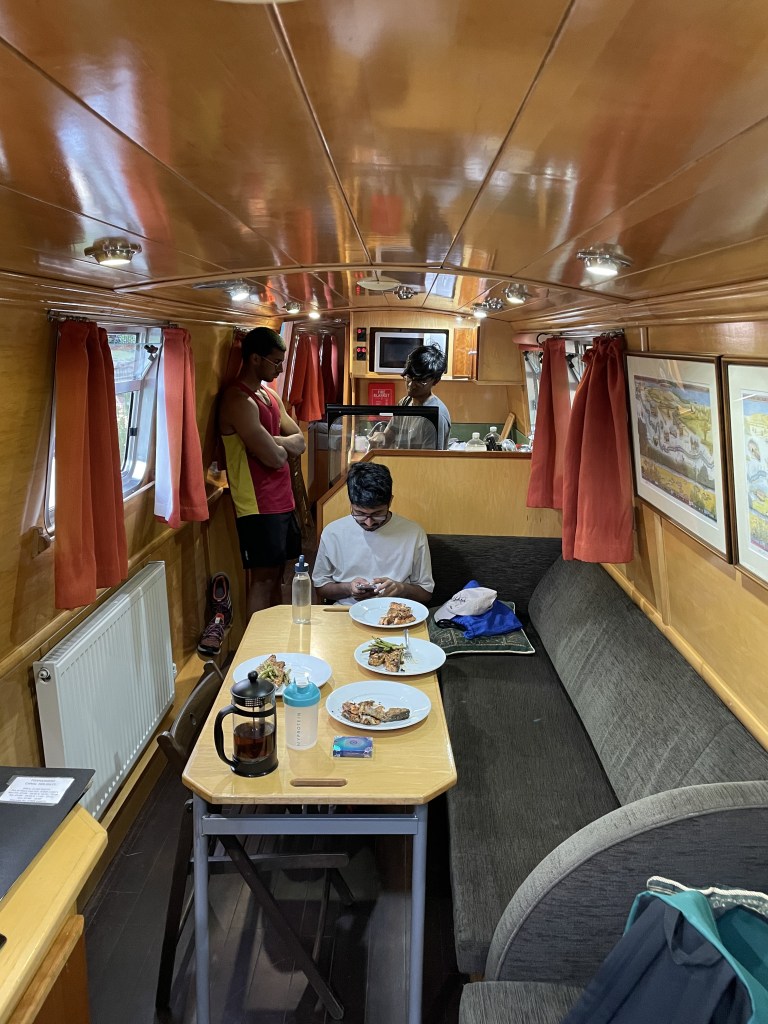
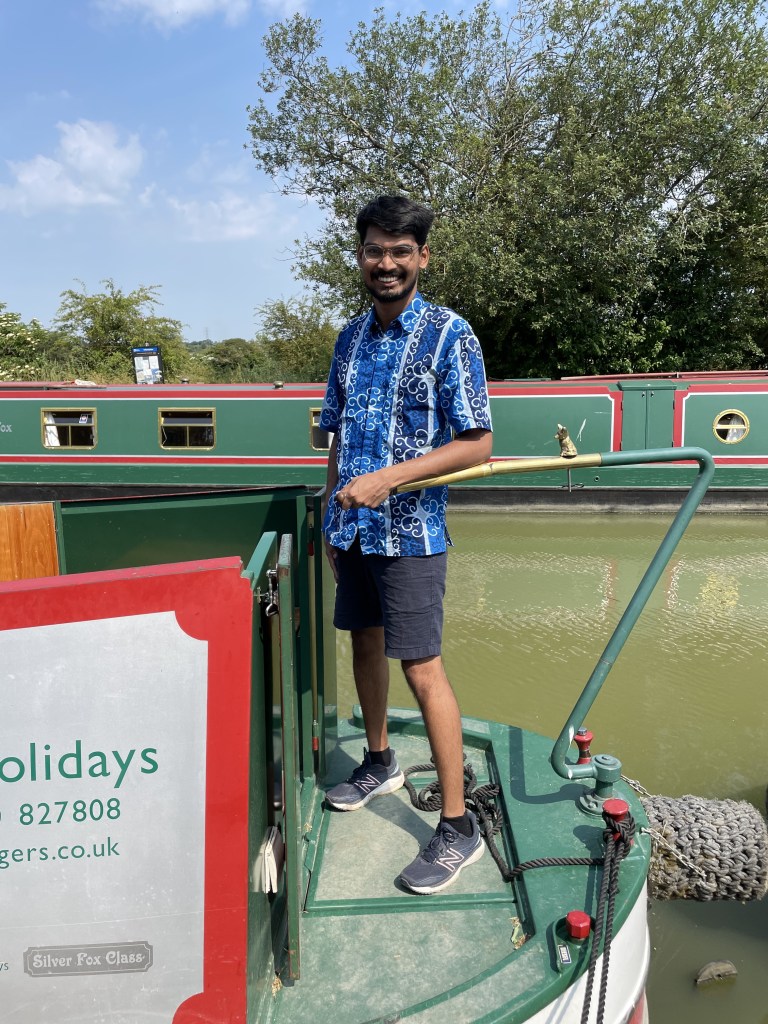
Our boat was 64 feet long. It had two sleeping areas with two single beds each, two toilets, a kitchen area, a dining area, a small bow deck and a stern deck with the driving controls. The boat allegedly slept up to 8 if the beds were set up in the right way, so it felt spacious for four people. It was not too long as to be a problem to drive, though I felt that a smaller boat would have made for easier manouevrability. The facilities were in great condition, and there was a lot of helpful equipment on board (microwave, cooking hobs, oven, fridge, etc.).


We were given an hour long briefing and trusted with the boat. The briefing covered:
- an introduction to the boat and equipment
- an introduction to the route
- demonstration on how to do a lock
- demonstration of how to drive the boat
- some daily boat checks
- rules of the road
- guidance on mooring
- safety and emergency procedures.
The induction was given by a gentleman working for the company we rented from, but his credibility was established when he pointed to a canalboat and said that that was his home.
No drivers license is required for canalboating in the UK. However, I felt that my time studying for the Powered Pleasure Craft Driving License in Singapore prepared me well for some aspects of canalboating such as an eye for safety, knowledge of boating terminology, and familiarity with steering and berthing.
It was lovely to be out in the countryside. People were friendly and would great you as they passed along the towpath. We saw many animals and greenspaces as is usual for the country side. There was a farm we stopped at both times we passed it to get a lovely ginger and honey flavoured ice cream. We had perfect weather – five sunny days.
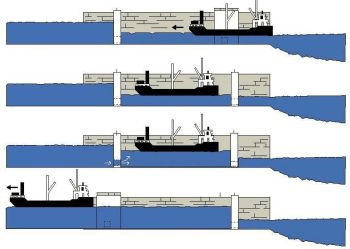
Along the route, we had to do locks. In order to make the canals usable in both directions, locks were placed along the canal to stop the flow of water. Locks are pairs of dams that can be open and closed in such a way as to allow boats on the canal to go uphill or downhill.
Even without the need for a license, boating is an activity requiring undivided attention and various skills that have to be developed. One incredible aspect of our trip was the willingness of passerbys and residents along the canal who were willing to stop and help us through whatever situation we were in. On the first evening we were trying to moor (i.e. “park” the boat) at a canalside pub for the night. A gentleman enjoying his summer evening at the pub came from quite a distance to help us bring the boat in. He taught us a sequence of manouevres that help turn the boat in place. He also guided us on how to pull the boat in using ropes and tie it to the bank. We used the lessons he taught us throughout the rest of our trip.
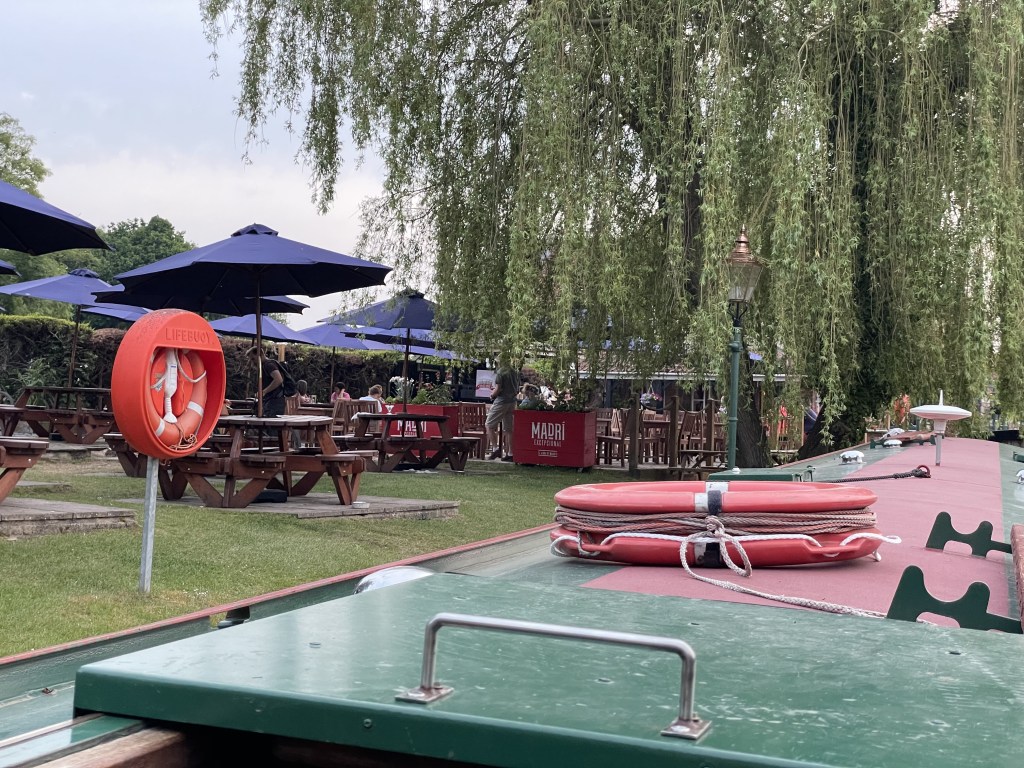
There were other such moments throughout our journey. As if in by design, there was a house right next to the very first lock on our journey. In this house lived a friendly man who enjoyed spending time in his yard from which he could see first time holidayboaters do their first lock.
We also had some difficulty turning our boat around. We decided not to take the boat all the way into Bath as we enjoyed a more leisurely pace. We opted instead to stop at Avoncliff Aqueduct and take a train or taxi into Bath. This meant we had to find somewhere to turn our boat around. Note that the canals are not nearly as wide as the length of the boat. We found a slightly wider area at a right angle turn after the aqueduct which had just enough space to draw a circle whose diameter would be the length of our boat. It took us about half an hour, a pole, a paddle and advice from two onlooking canalboaters to turn it around. After our turn was completed they said with admirable simplicity, “That was entertaining!”.
We also had people compliment us on a mooring manouevre. They came from across the canal to say “We live on a boat and that was excellent”. Another situation we encountered was that it was getting dark and someone came to warn us that there are no free mooring sites up ahead on the river and that its best to moor early at the free space on a watering point. We were told during the briefing not to moor at watering points as other boats might need to use them, but it seemed like the right call in this situation and we simply made sure to leave early in the morning so we wouldn’t be blocking anyone.
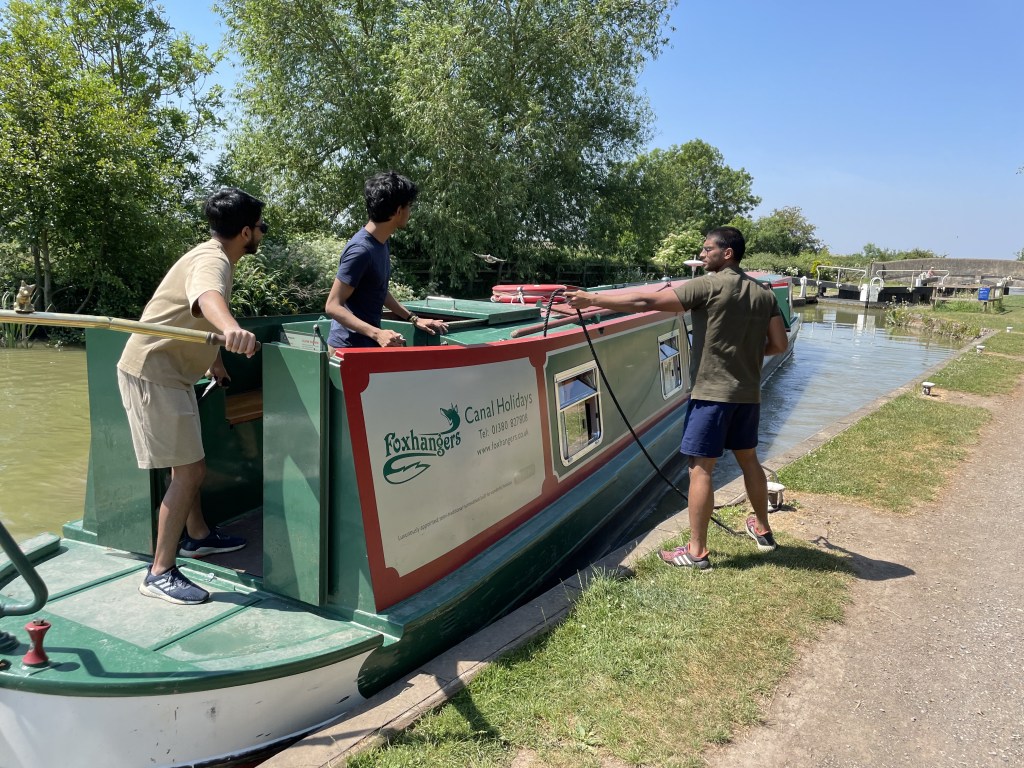
I enjoyed captaining the vessel. This brought tricky situations and I got to enjoy navigating the self-defining moments that come leadership. One member of the crew was repeatedly making jumps over long distances to get off the boat when we were mooring. He would do this out of impatience as the boat moves very slowly when it approaches the bank during mooring. I had to negotiate that he not make such jumps in the name of safety. In navigating this conversation, I realised that there was a difference in values between us. As someone getting into boating, I was taking pride in doing things properly and safely. For me, you don’t jump far onto the bank because you will not be able to do this as your boats get bigger, and you might as well put in the practice to get good at mooring the boat close to the bank and doing things properly. On the other hand, he did not expect to boat much. In that case you might as well do things quickly, and jumping to the bank seemed like it had a very small chance of going wrong.
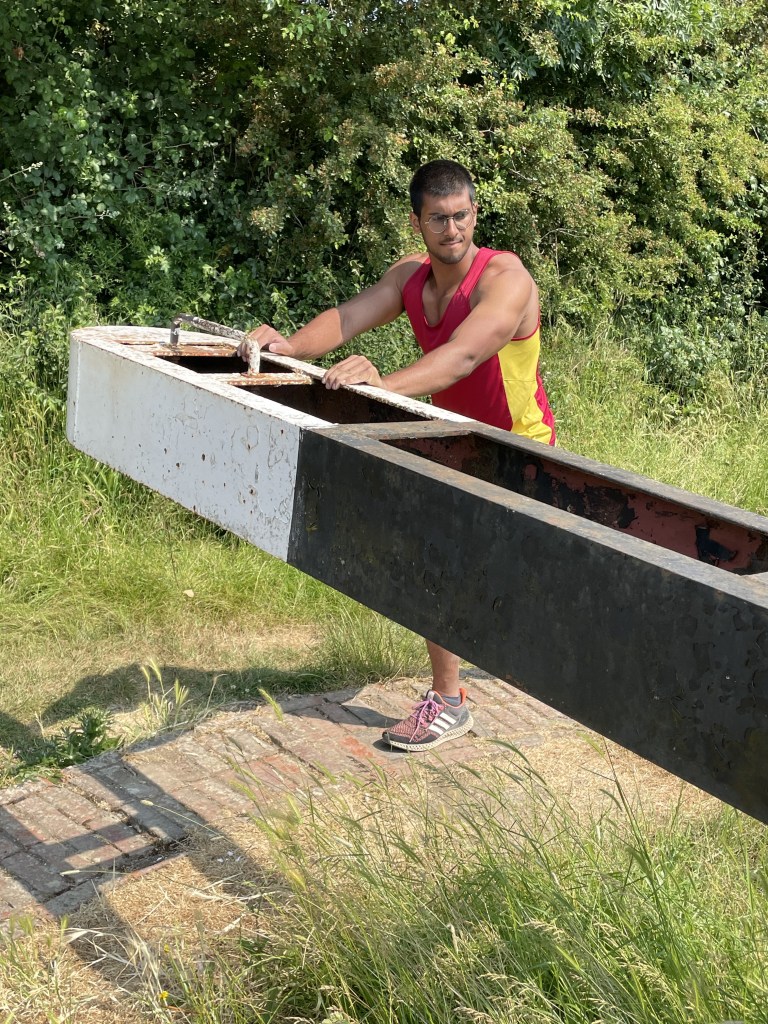
However this crew member eventually made a very risky jump across a half closed lock! A fall in that situation would be a fall of a few meters near stone and metal infrastructure that could easily have led to bad cuts. Not to mention the canal water is not the cleanest, so an exposed cut in that water would require some practiced first aid and medical attention. Fortunately it didn’t go wrong but at that point it was easier for me to convince him that he was taking significant risks. The one time it did go wrong for him was when he unrealisingly jumped into a whole bush of nettle which was hurting them for hours afterwards AND they lost one of their wireless earbuds in the process. Safety 1 – 0 Haste.
Another disagreement occured at our only stop at a watering point. The water tank was filling up slowly. To fill it up all the way might have taken half an hour. Over the course of 3.5 days we had only depleted the full water tank to 60% full. One crew member suggested that once the water tank was 80% full we would definitely have enough for the rest of the trip. I had a strong intuition that we should fill the water tank all the way – It was mentioned in passing during the briefing as well. Again I had to be the “boring adult” in the situation and try to defend the case of safety. I wasn’t able to do it well at the time but the next morning I woke up to the answer. If you fill a tank to 100% full, it overflows and you are absolutely sure that it is full. On the other hand, you only know that it is 80% full because of an electronic meter on the boat, which might be faulty at any time!
I am grateful that even though my crew at times disagreed with me, when it came to matters of safety they did come around when I explained the reasons to them.
Finally one proactive decision that I made was to ask one of our crew to postpone their shower to after we completed the complicated U-turn manouevre mentioned above. At first it felt like I was asking for too much as the other three were already handling the turn, but it turned out that the crew member who postponed their shower prevented us from coliding with the bank two times! In the Singapore powerboat course we were taught – “everyone has lookout duty at all times, even grandmas and babies on board”. The only reason it was hard to make this decision was that I was afraid of being too controlling of my crew, but I think this is a helpful fear to balance at the back of your mind as people do get annoyed when they are micromanaged.
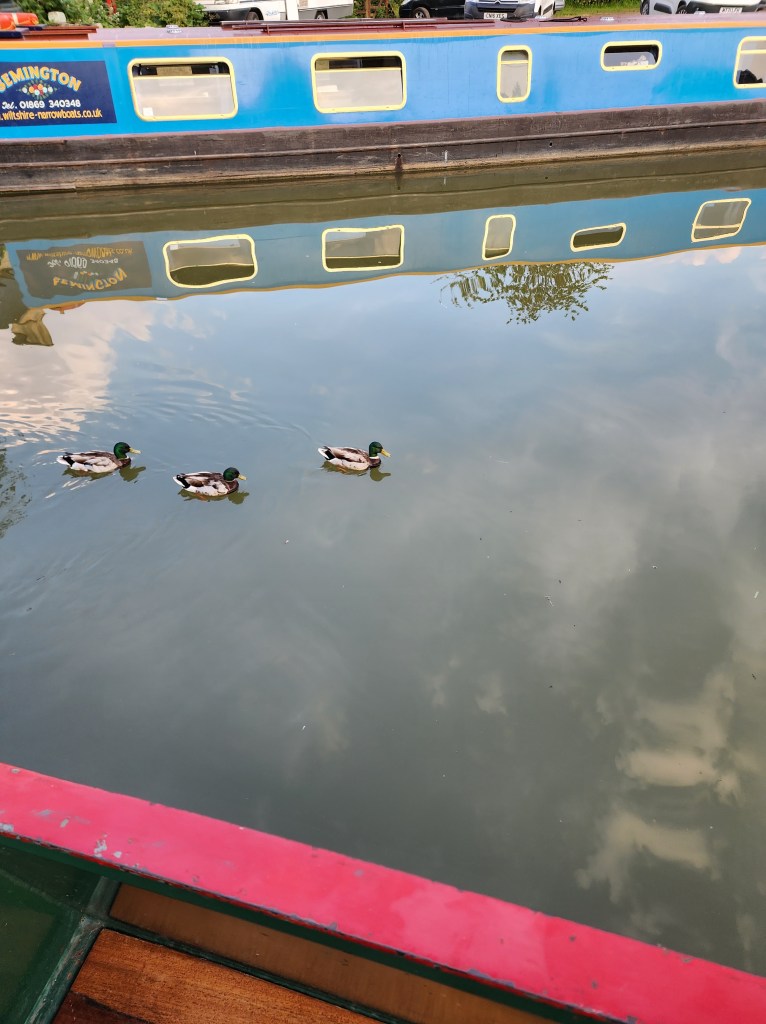
Four felt like a good number of people to share the load of the various tasks involved. One person has to drive at most times, two are needed to do a lock elegantly, and a fourth person might be engaged in cooking. Perhaps five would have been just perfect as the chef could also have a sous chef. Another pair of hands could have helped with photography as well.
In the evenings we enjoyed conversation over unending games of Hearts and the soundtrack of Om Shanti Om. Mayank and Ashwin did a fantastic job preparing all the food, notable dishes were Thai boat noodles and Butter Chicken.

The boat rental was cheap. For four nights we paid just under GBP 200 per person. This is inclusive of fuel and insurance. We did note that the price went down between when we did our first search and when we booked the boat so I suspect the company was fearing the boat would go unbooked and put some discounts in place. We booked the boat only about two weeks before the trip. The other costs were groceries, pub trips, trains and cabs.
Feelings
The world suddenly felt bigger. Holiday boating can be enjoyed so much more, and a few months ago I wouldn’t even have thought to do it. If anyone is making a plan, please invite me to be a part of your crew. I would love to share this experience with so many people I know.
Beyond canalboating, the British waterways are an amazing public space. It is great to see the national effort to maintain them. I would like to explore them in other ways – perhaps by kayak or paddleboard. I’ve also recently been on a run along a canal in London and enjoyed that very much.
Every activity done on a boat has more meaning associated with it. Conversations, meals, thoughts, experiences – everything is enhanced by the fact that for a short while, this boat has become your whole world, and the people on it are everyone that matters for now.
I’ve always been a theoretician. I’ve enjoyed academics, maths, philosophy, theoretical computer science. It felt great to see my boating mindset and skills develop during the trip. Doing something so hands-on and improving at it has inspired me to take on new types of challenges and take pride in the way I handle real-world situations. I have particularly enjoyed the risk management perspective that boating has inculcated in me.
The trip got me really tired. I wanted to be there for every moment and didn’t rest well enough. Next time I will manage my energies better.
In summary, boating is great, let’s do it sometime!
Appendix – What are these waterways?
Waterways played a crucial role in the success of the Industrial Revolution in the UK. Canals were constructed to transport raw materials and finished products between factories and markets, allowing manufacturers to expand their operations and increase efficiency. The UK was the first country to build such a nationwide canal network. Most of the British waterways were built between the 1770s and 1830s, after which rail transport became a more popular means of transporting goods. These waterways still exist today, but are primarily used for leisure activities – such as canal boat holidays.
Further reading
This all began with my powerboat course in Singapore: read about it here.
- Information for first time Holiday boaters: https://canalrivertrust.org.uk/enjoy-the-waterways/boating/go-boating/boat-holidays-and-trips/information-for-first-time-holiday-boaters
- Canal network interactive map: https://canalrivertrust.org.uk/enjoy-the-waterways/canal-and-river-network
- 1993 Documentary on history of British canals https://www.youtube.com/watch?v=gDVdcTFV8Nk
- Book canalboat holidays: https://www.waterwaysholidays.com/
- 20 min youtube video on history of canals in UK https://www.youtube.com/watch?v=y3Q-3GdPMX0
 Shashvat Shukla